
















Crypto: Creating a Crypto Wallet (Hot and Cold)
Last update: 05 Jan 2026, 09:00
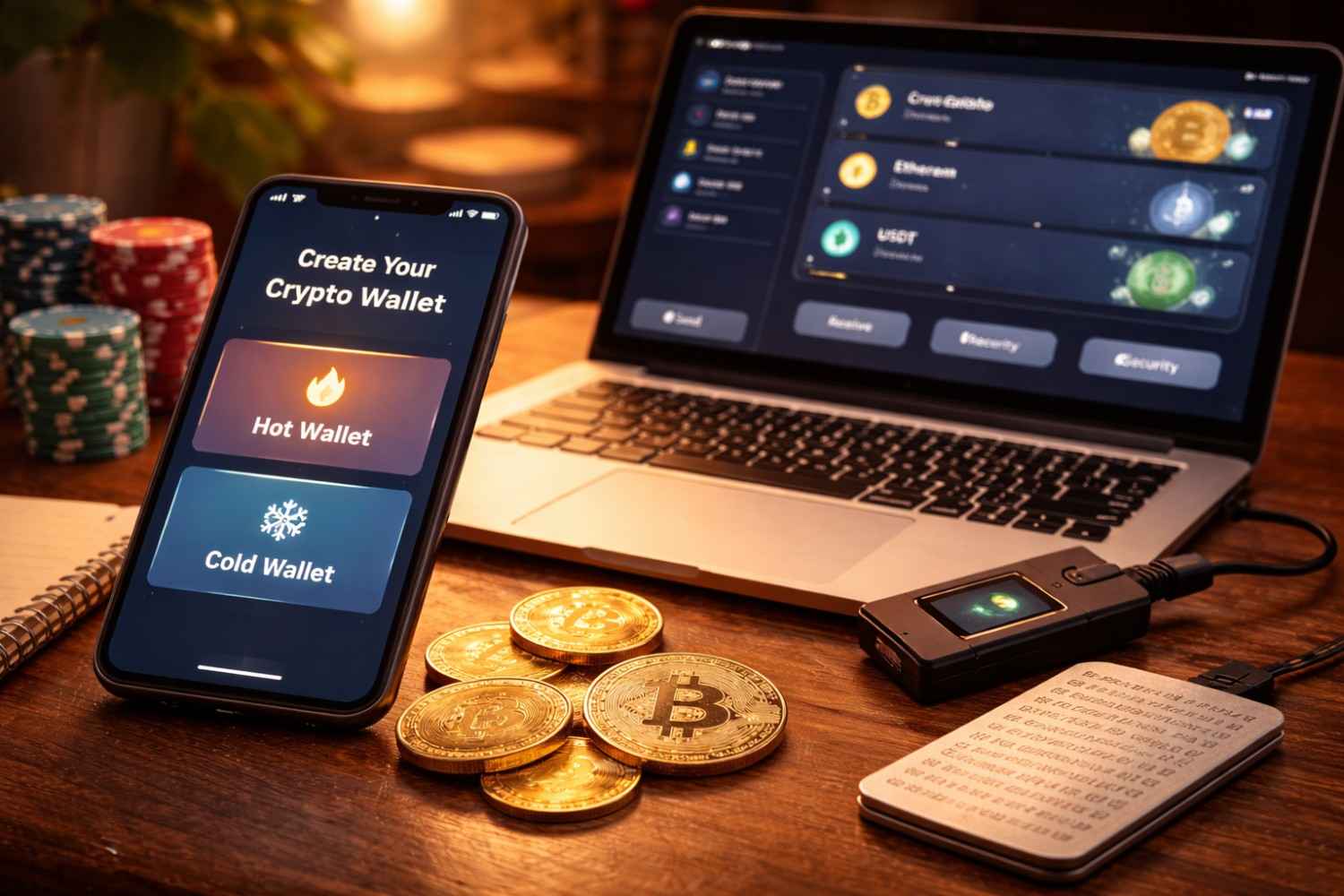
Cryptocurrency is changing the digital landscape, and it is a natural fit in gambling, where gamers will use crypto more because of faster, more anonymous, and more secure transactions. With high-value transfers, in addition to planning deposits or withdrawals daily, it is important to understand the different types of wallets in order to select the appropriate one. As a casual player or high-stakes gambler, storing and managing your crypto in a secure way creates peace of mind, knowing your funds are safe and can be accessed when you want to cash out or play your next risky game.
What is a Crypto Wallet?
A crypto wallet is a digital tool for managing and storing private keys that are used to access and spend your cryptocurrencies. A wallet does not actually store your coins; it stores the credentials that will allow you to access your coins on the blockchain.
At the most basic level, wallets can be divided by who controls those keys:
- Custodial Wallet: A third party such as an exchange manages the keys on your behalf, making it easier for beginners but adding a layer of dependency.
- Non-custodial Wallet: It lets you hold the keys yourself, giving you full control and responsibility for your assets.
Types of Crypto Wallets
With the best knowledge of crypto wallets, you can make the right choice for storing and managing your digital assets. We encourage users to match their wallet type with their needs – whether they want to use it for active trading, crypto gambling, or long-term holding. Crypto wallets fall into two broad categories: hot wallets and cold wallets.
Hot Wallets: Convenience with Connectivity
Hot wallets are run on the internet and offer easy access to your cryptocurrency. The ease of use of hot wallets makes them a desired option for active gaming transactions, but they come at a slight security cost.
For instance, hot wallets are often chosen by gamers who take very quick, shorter-than-a-second bets, win a generous amount and withdraw them immediately or use offers which have a use-by date. Hot wallets are accessed so much faster, as players can instantly sync their wallets with gaming platforms and resume the fun substantially quicker. In fact, many hot wallets allow multiple tokens and have live prices, which all help players manage their gaming budget.
However, hot wallets are more vulnerable to malware, phishing attacks, and scams and a user must not forget that hot wallets are always connected to the internet. For this reason, it is common practice to only use the hot wallet with the amount needed for gaming activity, like a digital “checking account” version for crypto.
Types of Hot Wallets
- Mobile Wallets: Trust Wallet and MetaMask let you store crypto and connect to games via your smartphone.
- Desktop Wallets: Exodus offers a robust interface for managing assets on your PC.
- Web-Based Wallets: These run through browsers and offer quick access without installing software.
Pros and Cons
Pros
Cons
Step-by-Step Guide of Setting Up a Hot Wallet
- Choose a Wallet: Go with trusted names like MetaMask or Trust Wallet.
- Download the App: Use official app stores or websites.
- Create a New Wallet: Follow the on-screen prompts to set it up.
- Backup Recovery Phrase: Write it down and store it offline.
- Secure the Wallet: Enable 2FA and set strong passwords.
After creating the wallet, you can use wallet connect protocols or browser extensions to connect to gaming platforms. It is crucial to verify the URLs of the platforms you connect to avoid phishing traps. You should also limit the amount of funds you keep in your hot wallet and periodically transfer excess funds to a more secure cold wallet.
Additionally, you should get to know your wallet settings, transaction speed options, gas fee settings, and how to add a custom token. Knowing how to manually add a token contract can be very important when trying to access your game-related assets, especially niche gaming coins or NFTs.
Cold Wallets: Security First
Cold crypto wallets store private keys offline, making them the best possible solution for crypto security and storing your assets. Cold wallets are intended for large personal amounts or savings that are not accessed daily.
In the gaming space, cold wallets serve as a vault for high-rollers or platform operators. They represent a means to set aside or protect longer-term winnings and tournament pay-outs or temporarily set aside funds for when you’ll play again. Unlike hot wallets, cold wallets are not on a digital battlefield and are not subject to most online attacks and hacks.
In fact, the greatest drawback of cold wallets is that they require a manual transaction signing process and a hot wallet to connect with in order for cash-in or cash-out activity to occur. For users who prioritise peace of mind or protecting capital, cold storage comes as an incredibly reliable option.
Types of Cold Wallets
- Hardware Wallets: Devices like Ledger or Trezor that sign transactions offline.
- Paper Wallets: Physical printouts or handwritten copies of keys.
- Air-Gapped Devices: Devices are never connected to the internet.
Pros and Cons
Pros
Cons
Step-by-Step: Setting Up a Cold Wallet
- Buy from Official Source: Only purchase from manufacturer websites.
- Initialise Wallet: Follow the setup guide provided with the device.
- Write Down Recovery Phrase: Store it in multiple secure locations.
- Transfer Funds: Send crypto from your hot wallet or exchange it for the cold wallet.
After a successful setup, many users set up a passphrase along with their recovery phrase. This “25th word” is a secondary layer of protection in case someone has access to your original seed. Losing your passphrase means you will lose access to your funds, so it’s important to be diligent and organised.
You also need to be diligent about regular upkeep. Cold wallets do not need to be refreshed regularly, but the manufacturers may provide security patches or firmware upgrades. Make sure you develop a habit of checking for official updates and steer clear of downloading firmware from third-party sites, which can be security concerns in and of themselves.
Online Gaming – Specific Wallet Setup Checklist
When choosing a wallet for online gaming, keep these in mind:
- Transaction Speed: Ensure the wallet processes deposits and withdrawals quickly.
- Fee Control: Pick wallets that let you set custom gas fees.
- Mobile-Friendly: Mobile apps are essential for gaming on the go.
- Token Support: Ensure compatibility with major tokens like BTC, ETH, USDT, and gaming-specific coins.
Hot vs Cold Wallets: Which is Right for You?
When playing in the world of crypto-powered gambling, your digital wallet isn’t just a storage solution. It’s a critical tool for gameplay, bankroll management, and security. Here are a few features listed for you to choose your wallet wisely:
| Feature | Hot Wallet | Cold Wallet |
| Use Case | Perfect for in-game purchases, quick deposits/withdrawals | Best for storing winnings or your long-term bankroll |
| Accessibility | Instantly accessible; ideal for daily transactions | Not readily accessible; better for storage and long-term holdings |
| Security | Connected to the internet, more vulnerable to theft | Offline storage is highly secure from cyber threats |
| Gaming Compatibility | High | Moderate |
| Examples | Mobile apps, web-based wallets, browser extensions | Hardware wallets (Ledger, Trezor), paper wallets |
Red Flags: Wallet Scams in the Wild
Crypto scams are common and evolving with time. In gaming, scammers use:
- Fake Wallet Apps: Available in unofficial app stores.
- Phishing Links: Disguised as bonuses or promotions.
- Impersonators on Telegram: Fake customer support representatives.
Scammers often prey on the excitement around free money and urgent withdrawal issues. They may clone sites or social profiles, hoping to convince users to give up the seed phrase. Players must verify if the apps are legitimate and bookmark believable URLs for future use.
Do not respond to unsolicited messages offering help with your wallet. Responsible wallet developers will never directly message you asking for your recovery phrase or password. Be sure to report wasted time to platform moderators or the wallet provider’s security team.
Security Tips for All Wallet Types
- Strong Passwords: Mix letters, numbers, and special characters.
- 2 Factor Authentication: Always enable an added layer of protection.
- Offline Backups: Keep your seed phrase on paper, not cloud.
- Address Verification: Double-check wallet addresses before transferring funds.
- Stay Updated: Install security patches and app updates regularly.
Online gamers should protect their crypto account like they protect their bank account. Don’t share screenshots, don’t publicly show your balances, and consider using pseudonymous wallet names. Discretion, discipline, and regularly reviewing your wallets can protect your digital wealth.
Conclusion
Since crypto has become a standard in online gaming, it is always important to choose a wallet. While hot wallets offer ease of use and speed for transactions, cold wallets are a safe place to store the digital currency you intend to keep. The best gaming setup is to use both hot and cold wallets, which allows you to manage risk and game uninterrupted. But choosing your wallet is not just about technology; it’s also about trust, strategy, and foresight. No matter if you are making casual bets or building a crypto-gaming portfolio, taking control of your digital assets is the first step toward long-term success.
FAQs
Can I use the same wallet for both gambling and saving my crypto long-term?
You can, but it is not recommended to use the same wallet for security reasons.
Can I recover my wallet if I lose access to it, and how do I do it safely?
Yes, you can recover it using your seed phrase and once you recover it, store it securely offline.
Is there a limit to how much crypto I can store in a cold wallet?
No, but follow strict security practices.
Can I use a cold wallet to make in-game crypto purchases instantly?
Not instantly cold wallets require extra steps.
Can I use a single wallet for both Bitcoin and Ethereum transactions?
Yes, most modern wallets support multiple assets.